NINGBO, ZHEJIANG, CHINA, September 10, 2026 /EINPresswire.com/ — The handling of complex fluids presents significant engineering challenges within modern food processing and chemical manufacturing plants. Materials like thick chocolate, concentrated fruit pastes, and high-molecular-weight polymers exhibit complex non-Newtonian flow behaviors under mechanical stress. These challenging substances require precise thermal regulation and physical transport through sophisticated industrial piping networks. Facilities frequently deploy heavy-duty equipment to manipulate these dense products efficiently, subjecting internal components to extreme thermal loads and high pressure. Maintaining system integrity represents a primary concern for maintenance engineers who manage these delicate production lines daily. Within this demanding processing environment, a Professional Customized Oem Mechanical Seals Manufacturer provides essential technical solutions to eliminate fluid leakage and minimize expensive production downtime. Preventing unexpected fluid migration requires a comprehensive understanding of interface tribology under heavy physical loads to ensure operational success.
Decoding the Failure Mechanics: Why High-Viscosity Media Destroys Conventional Seals
High-viscosity fluids generate immense internal friction during industrial pumping and shearing operations. When a fluid exhibits non-Newtonian properties, its dynamic viscosity changes instantly based on the applied shear rate. For instance, pseudoplastic materials thin out under rapid agitation, whereas dilatant fluids thicken under sudden structural stress. These erratic physical shifts exert massive viscous drag forces on the internal components of rotating machinery. Standard mechanical seals often fail because these intense drag forces warp flexible components within the assembly. The fluid friction generates localized hot spots, which quickly degrade the thin lubrication film between faces, causing rapid wear and unexpected fluid escape.
Material stagnation and solidification present additional risks to system reliability. Many high-viscosity products contain high concentrations of solids, sugars, or reactive polymers. For example, chocolate easily overheats and caramelize when trapped in stagnant zones, while industrial polymers may undergo unintended cross-linking reactions. When these materials migrate into the microscopic gaps between seal faces, they undergo rapid thermal degradation. The resulting solid deposits break the crucial fluid film that lubricates moving interfaces. This phenomenon leads directly to dry running conditions, which produce excessive frictional heat and cause thermal cracking. Furthermore, these solids clog internal spring mechanisms, preventing natural wear compensation.
Scraped Surface Heat Exchangers operate within an exceptionally harsh mechanical envelope. These machines feature a central rotating shaft equipped with scraper blades that continuously remove product from heat transfer tube walls. This mechanical scraping action creates intense localized pressure fluctuations inside the process chamber. Operating pressures frequently reach up to 12 bar, forcing viscous media deep into structural clearances. The combination of high axial pressure and continuous agitation subjects the shaft sealing system to severe multi-directional stresses. Standard component designs cannot withstand these combined forces without suffering from premature deformation and eventual structural failure.
Fluid Dynamics in SSHE: Engineering the Interface to Prevent Media Leakage
Managing fluid dynamics within the sealing zone requires precise control over boundary lubrication principles. A mechanical seal relies on a microscopic fluid film to separate the rotating face from the stationary face. When processing highly viscous fluids, maintaining this film becomes complicated due to fluid resistance. If hydraulic closing forces exceed film pressure, faces make contact, causing rapid wear. Conversely, excessive gaps create immediate leakage paths. Engineers must optimize face topography to preserve stable boundary films under extreme viscosity.
Mechanical deflection represents another critical variable inside scraped surface heat exchangers. Heavy product loads combined with continuous scraper blade impacts generate significant shaft runout and axial displacement. This continuous movement forces the mechanical seal to adjust its position rapidly. If a seal lacks sufficient axial flexibility, faces separate momentarily during shaft deflections. Even microscopic gaps allow high-pressure fluids to breach interfaces instantly. Therefore, internal seal geometry must accommodate micro-movements while maintaining uniform face pressure.
The GW-HOM2 Architecture: Anti-Clogging and Balanced Design for Severe Applications
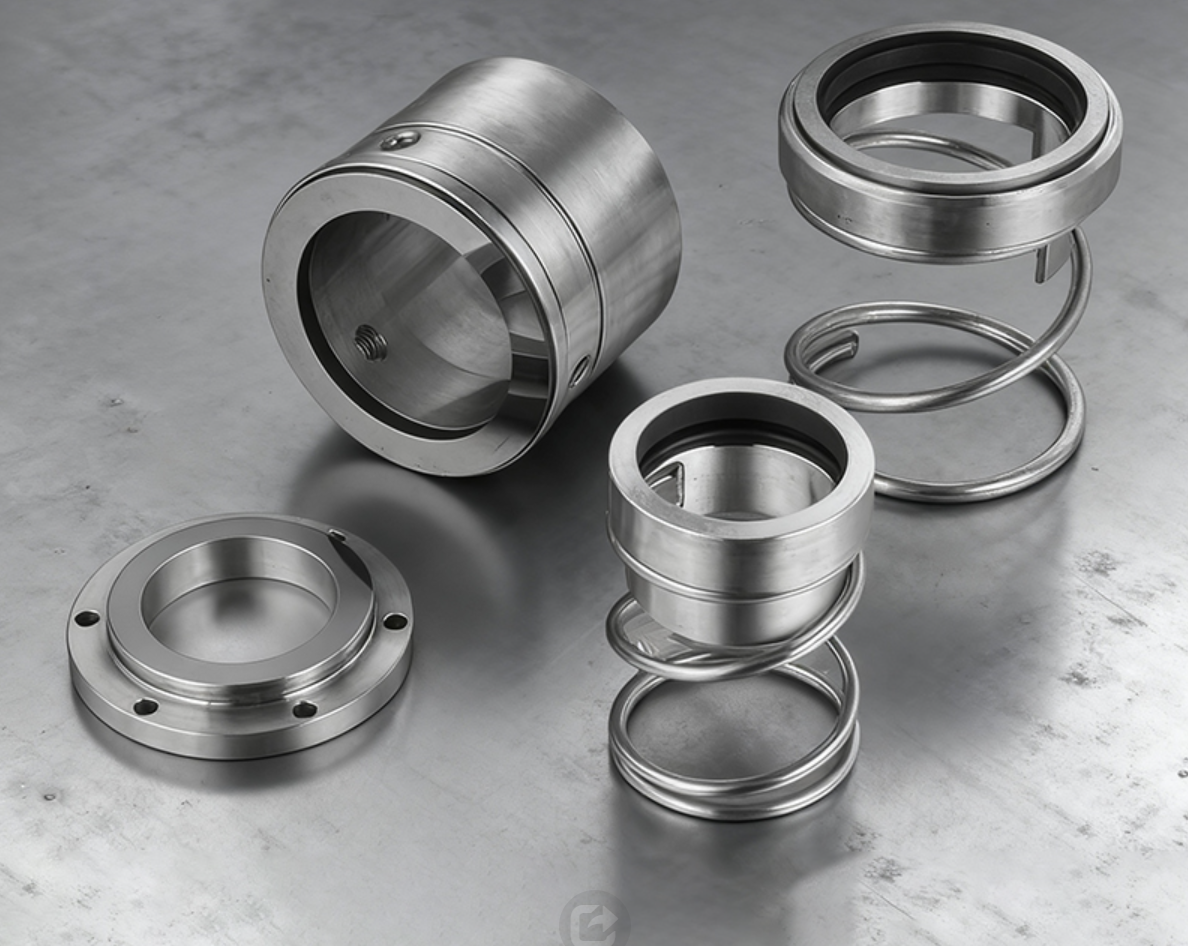
To address these severe processing challenges, specific alternative seal architectures offer enhanced field reliability. The GW-HOM2 mechanical seal provides an effective solution for industrial scraped surface heat exchangers, serving as a direct drop-in replacement for original equipment parts like Alfa Laval Contherm systems. Plant operators install this pre-assembled unit without performing complex onsite measurements or machinery modifications. This approach significantly reduces installation errors and shortens maintenance turnarounds while utilizing a cost-effective alternative component strategy.
The internal engineering of the GW-HOM2 model relies on a hydraulically balanced configuration. In an unbalanced seal, internal system pressure exerts a direct, unmitigated force that pushes the faces together, causing excessive friction at 12 bar. In contrast, the balanced design redirects a portion of the fluid pressure to counteract this closing force. Consequently, the seal maintains consistent face loading across various pressures. This structural balance eliminates pressure-induced distortion, preserves the lubrication film, and extends component longevity.
Furthermore, the GW-HOM2 mechanical seal features an open-flow fluid path that eliminates product stagnation zones. Conventional designs incorporate narrow recesses and exposed springs where viscous sauces or polymers accumulate and harden. The GW-HOM2 model alters this arrangement by utilizing an open geometry that exposes sealing components to the main product stream. Consequently, the moving fluid continuously flushes the seal area, preventing localized overheating and material accumulation. This design also facilitates complete Clean-In-Place and Sterilize-In-Place operations without dismantling the assembly.
Materials Science at the Core: Food-Grade Certifications Meet Extreme Wear Resistance
Material science plays a fundamental role in determining operational durability in severe fluid applications. High-friction environments require robust face combinations that resist abrasive wear and mechanical shock. Engineers utilize hard-on-hard material pairings, such as Sintered Silicon Carbide against Sintered Silicon Carbide, or Tungsten Carbide against Tungsten Carbide. These advanced materials possess exceptional hardness and superior thermal conductivity, allowing rapid dissipation of localized frictional heat. By maintaining flatness under thermal stress, these face materials prevent fluid migration over extended periods.
In addition to primary faces, secondary elastomers must withstand rigorous chemical exposure and thermal cycling. The assembly incorporates food-grade elastomers complying with FDA and international hygienic standards. Elastomers like specialized EPDM, Fluorocarbon, and premium Perfluoroelastomer retain elasticity across a temperature range from -20 degrees Celsius up to 180 degrees Celsius. This chemical resilience prevents swelling, hardening, or cracking caused by aggressive cleaning agents. Moreover, the structural hardware utilizes high-grade SUS316 stainless steel to eliminate corrosion risks, supplemented by specialized Chromium Oxide coatings.
OEM Customization & Quality Rigor: How Ningbo Guowei Bridges the Sealing Gap
B2B process plants require reliable component suppliers offering deep technical expertise and customization capabilities. GW SEAL (Ningbo Guowei Mechanical Seals Technology Co., Ltd) brings more than twenty years of dedicated manufacturing heritage to the international fluid handling market. Established in 2001, the company operates an advanced production facility creating high-performance sealing solutions. The engineering team possesses extensive experience analyzing field failures and modifying seal geometries. This technical foundation enables the manufacturer to deliver customized OEM alternatives that integrate seamlessly into industrial processes.
The production of high-performance seals requires strict adherence to quality protocols. Ningbo Guowei Mechanical Seals Technology Co., Ltd maintains an ISO9001 certified manufacturing process, ensuring material traceability and batch-to-batch consistency. Every seal undergoes rigorous testing, including face flatness inspections and hydrostatic pressure verifications. This strict quality control framework ensures that each alternative seal performs reliably under extreme workloads. By acting as a collaborative partner, GW SEAL helps plants eliminate chronic leakage, optimize mean time between failures, and lower maintenance costs.
Conclusion: Bridging the Selection Gap for Process Engineers
Optimizing industrial fluid processing requires a systematic approach to mechanical component selection. By addressing root causes of seal failure like viscous drag, material solidification, and pressure distortion, advanced engineering designs provide a reliable pathway to stable plant operations. Implementing customized alternative seals like the GW-HOM2 unit allows engineers to secure high-pressure performance without sacrificing hygiene or longevity. This focus on material science and structural innovation helps processing facilities maintain continuous production cycles. To explore engineering modifications, engineers can visit the official website at https://www.gwseal.com/.
Ningbo Guowei Mechanical Seals Technology Co., Ltd
Ningbo Guowei Mechanical Seals Technology Co., Ltd
+ +86 574-88241891
email us here
Visit us on social media:
LinkedIn
Facebook
YouTube
Legal Disclaimer:
EIN Presswire provides this news content “as is” without warranty of any kind. We do not accept any responsibility or liability
for the accuracy, content, images, videos, licenses, completeness, legality, or reliability of the information contained in this
article. If you have any complaints or copyright issues related to this article, kindly contact the author above.

Media gallery