
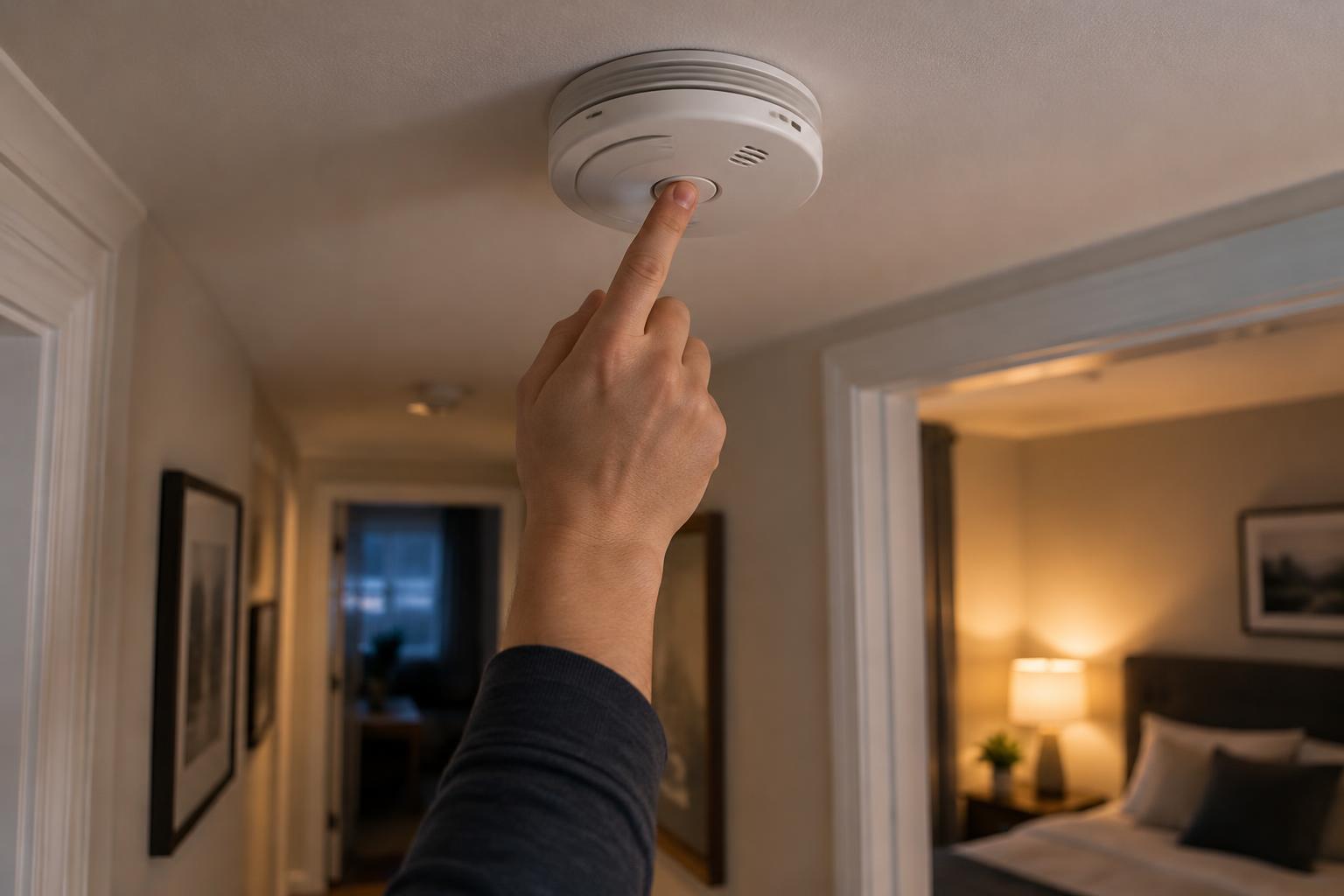
Practical steps address bedroom coverage, alarm testing and replacement schedules.
WILMINGTON, Del., Nov. 17, 2026 — X-SENSE is sharing home fire safety guidance focused on where smoke alarms belong and how to keep them working. The recommendations draw on established U.S. Fire Administration advice and emphasize regular checks, appropriate placement and a household escape plan.
Coverage depends on more than owning an alarm. Sleeping spaces, floor plans and the ability to hear warnings all matter.
Start With Sleeping Areas
The U.S. Fire Administration advises installing smoke alarms inside every bedroom, outside each separate sleeping area and on every level, including the basement. In larger homes, additional devices may be necessary to cover distant rooms and hallways.
Alarms generally belong on ceilings or high on walls, subject to the manufacturer’s instructions and local fire codes. Avoid spots near windows, fans or vents that could interfere with smoke reaching the sensor. In kitchens, the U.S. Fire Administration recommends keeping smoke alarms at least 10 feet from cooking appliances to reduce nuisance alarms.
Know How Alarms Work Together
When planning a home layout, residents can compare a standalone smoke detector with interconnected alternatives. With compatible interconnected alarms, a device detecting smoke can trigger others throughout the home, helping the warning reach people behind closed bedroom doors or on another floor.
The X-SENSE SD19-W wireless interconnected smoke alarm is one example. According to its published specifications, it uses a photoelectric smoke sensor and a sealed, nonreplaceable lithium battery rated for up to 10 years. It communicates wirelessly with compatible X-SENSE alarms; users should confirm compatibility and follow the pairing instructions before installation.
Test, Clean and Replace
The U.S. Fire Administration recommends testing smoke alarms monthly. Residents should also follow the device manual for cleaning and respond promptly to low-battery, fault or end-of-life alerts. A silent alarm during a test should be investigated immediately rather than assumed to be functioning.
Smoke alarms generally need replacement 10 years after their manufacture date, even if their test button still works. A sealed 10-year battery removes routine battery changes, not the need for testing or eventual replacement. Residents should never disable an alarm to deal with cooking smoke.
An escape plan completes the review: identify two ways out where possible, choose an outside meeting place and practice with everyone in the household. Working alarms and practiced responses are both important when a fire occurs.
About X-SENSE
Founded in 2013, X-SENSE has safeguarded more than 15 million households worldwide with its comprehensive range of smoke alarms, carbon monoxide detectors, and environmental sensors. Backed by international certifications and designed for long-term reliability and user convenience, X-SENSE is committed to delivering innovative safety for every home.
Media Contact
Company Name: X-SENSE ELECTRONICS LLC
Contact Person: Martin
Email: partners@x-sense.com
Website: https://www.x-sense.com/
State/Country: Delaware


